
Moldy Food, Aflatoxin & Pet Safety: What Every Owner Should Know
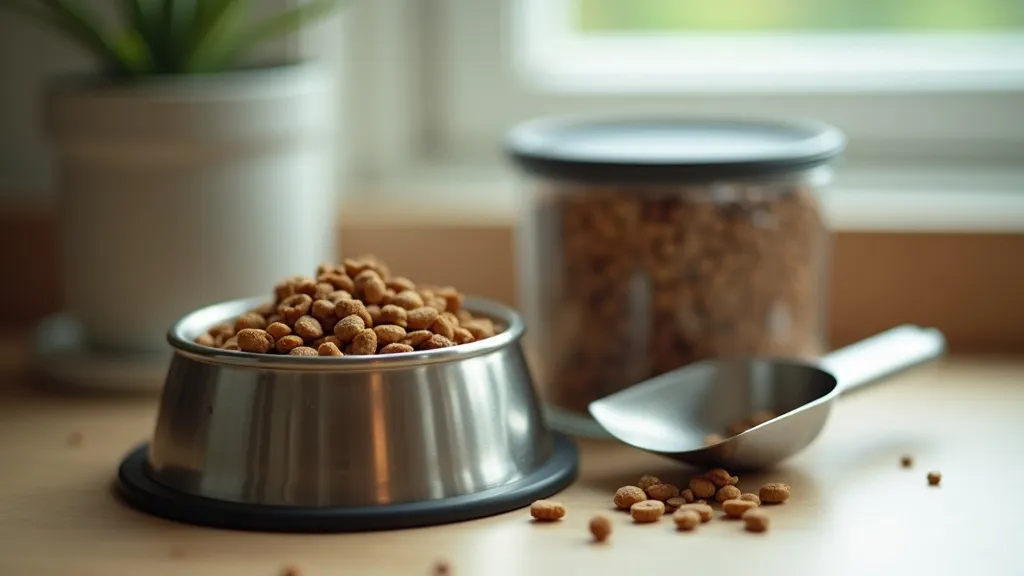
Here’s the honest shape of the pet-food-mold risk: moldy food and aflatoxin-contaminated food can be a real, sometimes fatal danger — but it’s about a pet eating it, not breathing it, and the worst events trace to contaminated manufacturing, not a stray scrap in your garage. The toxins can even be present with no visible mold, which is why this is a food-safety question, not a “can I see it” one.
This is the food-safety companion to our pet owner’s guide to mold and pet health. We have nothing to sell you. Here’s what aflatoxin is, what the biggest modern recall taught us, why pets are uniquely vulnerable, and how to store food safely.
What aflatoxin is
Aflatoxin is the part most owners have never heard of until a recall makes the news. Per the FDA, “aflatoxins are toxins produced by the mold Aspergillus flavus that can grow on pet food ingredients such as corn, peanuts, and other grains. At high levels, aflatoxins can cause illness (aflatoxicosis), liver damage, and death in pets. The toxins can be present even if there is no visible mold.”
Two things in that quote do a lot of work. “At high levels” matters — this is a dose problem, governed by testing and limits, not a trace-equals-doom claim. And “present even if there is no visible mold” is why you can’t eyeball your way to safety: aflatoxin contamination is caught by lab testing of ingredients and finished food, which is exactly what manufacturers and regulators are supposed to do.
The Sportmix recall — what it actually showed
The clearest modern example is the 2020–2021 recall of certain Sportmix and other Midwestern Pet Foods products over potentially fatal aflatoxin levels.
We keep the date and the caveat deliberately. “As of January 21, 2021” anchors the figures to a moment in an evolving investigation, and “not all confirmed” reflects what the FDA actually said. The honest framing is that these deaths and illnesses were linked to the recalled food, which is the careful way to describe an outbreak still being investigated. (Full FDA detail: the Sportmix recall alert.)
Why pets are uniquely susceptible
Why would a contaminated batch hurt pets more than it would hurt people eating the occasional contaminated food? The answer is in how pets eat. The FDA explains that pets are highly susceptible because they “generally eat the same food continuously” — so a contaminated batch isn’t a one-off exposure diluted across a varied diet; it’s the same food, meal after meal, day after day.
The Merck Veterinary Manual adds the species and age picture: aflatoxins “adversely affect birds, companion pets (dogs and cats), livestock, rodents, fish, and humans, with the young at particular risk.” So this is a dog and cat issue, and the young are flagged as more vulnerable — but the central mechanism is the continuous, single-source exposure that defines how most pets are fed.
The other path: scavenged moldy food
Aflatoxin in manufactured food is one route. The more everyday emergency is different: a pet eating something moldy it found — spoiled food from the trash, compost, a forgotten bowl, fallen food in a damp corner.
This causes tremorgenic mycotoxicosis, and it’s an urgent situation. The ASPCA warns that eating moldy food can cause tremors and seizures and can be life-threatening if untreated, and the Merck Veterinary Manual lists vomiting, tremors, ataxia, and seizures among the predominant signs in dogs. If your pet has eaten something moldy, call your vet or animal poison control right away and bring the packaging or a photo if you can. Don’t wait.
Safe storage, recalls, and the one rule that never fails
You can’t lab-test your kibble at home, but you control more than you’d think — and the habits are simple.
Storage won’t undo a batch contaminated at the plant — that’s what testing and recalls are for. But it prevents the at-home spoilage behind the more common scavenging emergencies, and it keeps you ready to act fast if a recall names your food. For the home-environment side of mold — the damp surfaces, bedding, and bowls where it starts — our colleagues at Mold Pros Phoenix cover mold in pet bowls, beds, and toys and the broader question of black mold and pets, and our own prevention guide covers keeping a pet’s spaces dry.
The bottom line
Aflatoxin and moldy food are a genuine, occasionally fatal risk — and it runs through the gut, not the air. At high levels aflatoxin can damage the liver and kill, it can be present with no visible mold, and pets are uniquely exposed because they eat the same food continuously. The Sportmix recall is the proof and the reassurance at once: the danger is real, and the system that catches it is the recall. Your job is the controllable part — store food well, keep the lot number, heed recalls fast, and never feed food that’s visibly moldy. And if your pet eats something moldy, treat it as the emergency it is.
When the hardest day arrives, that’s where we can help — connecting you with one vetted cremation provider in your area, free for pet owners, with nothing to upsell.
This guide is general information, not veterinary advice. It can’t replace an exam by a vet who knows your pet. If you suspect aflatoxin poisoning or your pet has eaten moldy food, contact a vet or animal poison control now.
Connect with the provider we'd trust
Free for pet owners · we sell you nothing · no paid listings, no upsells.