
Is Aquamation Actually Greener Than Cremation? An Honest, Sourced Answer
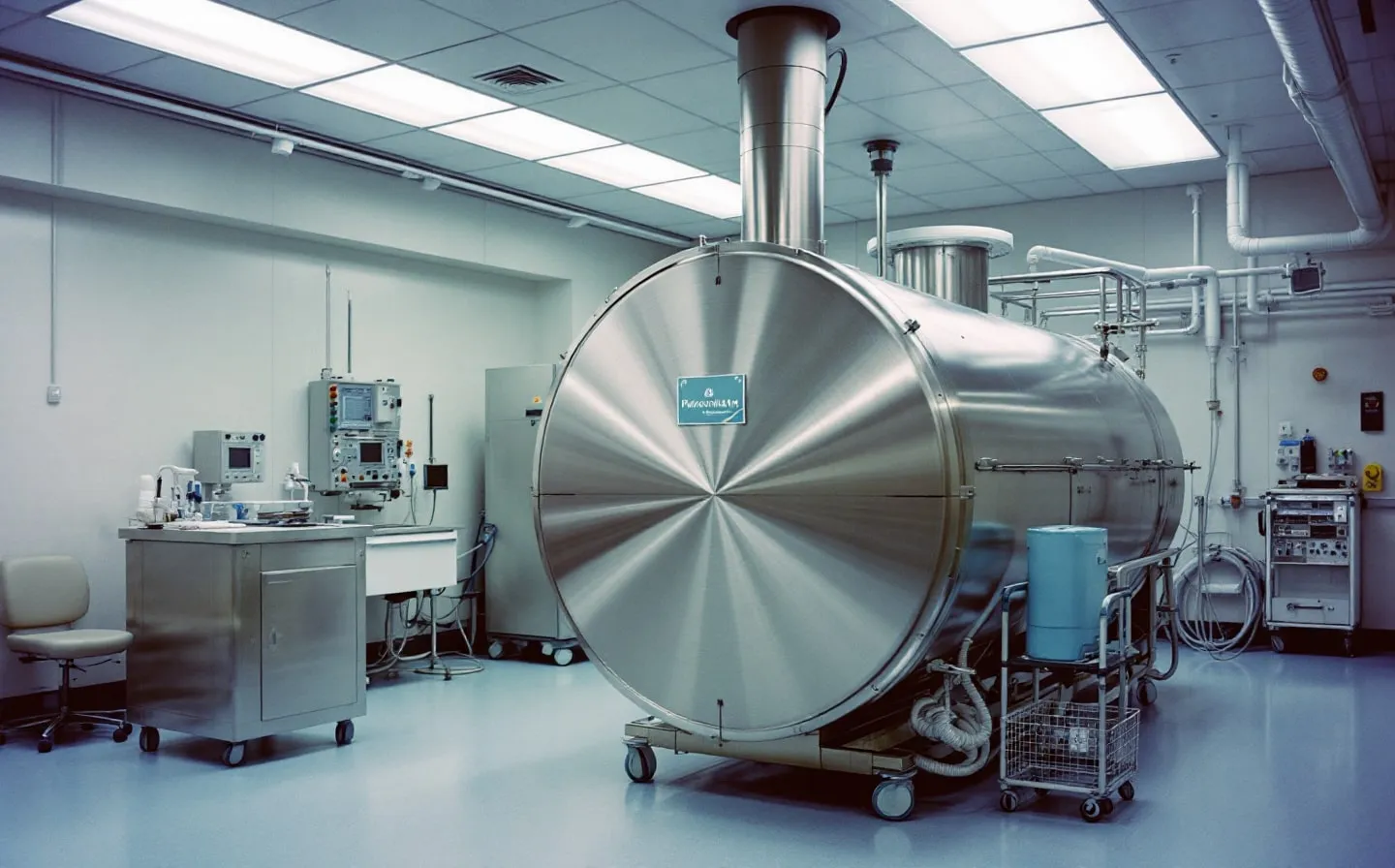
Aquamation — also called water cremation or alkaline hydrolysis — is marketed as the green way to say goodbye. Some of that reputation is earned. A lot of it is repeated without anyone checking where the numbers came from.
We did check. We traced every common “greener” claim back to its original source — the studies, the equipment makers, the legislative memos, the radio segments — and rated how much each one actually holds up. We have no provider or product to sell you, which is exactly why we can say what the conflicted sources can’t.
Honestly? Mostly yes — but less dramatically than you’ve been told. Aquamation’s one airtight advantage is that it burns nothing, so it releases no smoke and no mercury. The famous “90% less energy” and “a tenth of the carbon” figures, though, trace to marketing and a single industry-funded study — not settled science. Here’s the real picture.
The one advantage that’s airtight: no fire, no mercury
Start with the claim that doesn’t depend on any contested percentage, because it’s the strongest one and it’s oddly the one the marketing buries.
Aquamation uses heated water and alkalinity instead of flame. There is no combustion — so there is no smokestack, no combustion gases, and, critically, no mercury vapor. Flame cremation vaporizes the mercury in dental fillings and sends it into the air; it’s a recognized pollution source. UK government figures project that, left unabated, crematoria would account for roughly a quarter of the country’s mercury emissions to air (DEFRA). Peer-reviewed stack measurements put the mercury released per human cremation in the range of roughly 30 to 460 milligrams, depending on the person’s fillings and the country (Takaoka et al., Atmospheric Chemistry and Physics, 2010; Mari & Domingo, Environment International, 2010).
Aquamation produces none of that. The process recovers any metal as a solid for recycling rather than sending it up a chimney. This is the part of aquamation’s green case that rests on physics and peer-reviewed measurement rather than a press release — so it’s where an honest answer should start.
The numbers everyone repeats — and where they actually come from
Now the claims you’ll see on nearly every aquamation page: uses 90% less energy, a tenth of the carbon, 75% smaller footprint, the greenest option. These get repeated as settled fact. They are not. When you follow each one to its origin, the trail almost always ends at a company that sells the service, an advocate quoted in an article, or a legislative memo — not an independent measurement.
The “90% less energy” line is carried most authoritatively by a Mayo Clinic body-donation page — where it appears as a flat assertion with no citation to any study. Wikipedia’s frequently-quoted “one-quarter the energy / 90 kWh” figure traces, when you click through, to a 2013 humanities book chapter — not an energy measurement. The “75% smaller carbon footprint” also tracks back to that same uncited Mayo page. And many pages credit “the Cremation Association of North America (CANA)” for these figures — but CANA’s own page contains neither the energy number nor a carbon number. It uses only directional language (“significantly less fuel… lower carbon footprint”). The “per CANA” attribution is, in plain terms, manufactured.
Here is the same set of claims with their real provenance — the table no equipment maker will publish:
| The green claim you’ll see | Where it actually comes from | A real study behind it? |
|---|---|---|
| ”Uses 90% less energy” | Uncited Mayo Clinic page + equipment-maker marketing | No measurement found |
| ”90 kWh — a quarter of cremation’s energy” | A 2013 book chapter (via Wikipedia) | No — a citation chain, never measured |
| ”A tenth of the carbon footprint” | An advocate quoted in National Geographic | No — overshoots the one real study |
| ”75% smaller carbon footprint” | The uncited Mayo page + legislative memos | No |
| ”~600 lb CO₂ per cremation, per CANA” | An equipment maker (Matthews); CANA never said it | Order-of-magnitude only |
| ”The overall greenest option” | One industry-funded 2011 Dutch study | One study — and a newer independent one disagrees |
None of this means aquamation isn’t greener. It means the specific, confident percentages you’ve been handed are marketing, and the truth is quieter and more honest.
Energy, carbon, and water are three different questions
The single biggest trick in “green funeral” content is blending energy, carbon, and water into one fuzzy “90% greener” blob. They’re separate questions with separate answers.
Energy. Aquamation almost certainly uses less. A ~250°F water bath simply takes less energy than a ~1,700°F fire, and even the original equipment maker, Resomation Ltd, claims only “less than one fifth” — i.e. ~80%, not 90%, and that’s for the disposal step alone. The honest version: on the order of a fifth to a quarter of flame cremation’s energy, with wide uncertainty, because no independent lab has published a clean per-cycle measurement.
Carbon. Lower than gas cremation — but how much lower is genuinely contested (see the next section), and aquamation is not automatically the lowest-carbon option.
Water. This one’s counter-intuitive. At the machine, aquamation uses more water than flame cremation — on the order of 450–550 gallons per cycle once you count cooling and cleaning, though it varies by machine (TNO’s figures work out to roughly 250 liters for the process itself plus ~1,600–1,800 liters for cooling). On a full life-cycle basis, though, it comes out comparable or lower, because producing the natural gas and electricity a crematory burns is itself water-intensive. Anyone who tells you aquamation “barely uses water” is quoting the life-cycle figure; anyone who says it “wastes hundreds of gallons” is quoting the machine figure. Both are half the story.
The one real study — and its five catches
Almost every credible carbon number for aquamation descends from a single study lineage: a Dutch life-cycle assessment by the research institute TNO, first done in 2011 and updated in 2014, later peer-reviewed (Keijzer, 2017). It found aquamation the lowest-impact method, with roughly seven times less carbon than flame cremation (about 28 vs. 208 kg CO₂e per body). That’s the basis for nearly everything you read.
It’s a real, peer-reviewed study — and you deserve to know its catches, because no other consumer page lists them:
- It was commissioned by a funeral company (Yarden) that planned to sell aquamation.
- The aquamation energy figures it relied on were supplied by the equipment makers and printed as “confidential” — the public can’t see the number the conclusion rests on.
- The new methods were modeled as if already running at full scale, not measured from working machines.
- It uses Dutch electricity and burial assumptions, which don’t match the US.
- Aquamation scored worst of all methods on one measure — eutrophication (the nitrogen-rich leftover water can over-fertilize waterways). Every vendor page omits this.
And there’s a newer, independent life-cycle study — done for a different funeral cooperative in 2024, with no equipment maker supplying the data (Hedgehog Company / DELA). It found aquamation’s carbon advantage much smaller — about 35% below gas cremation, roughly equal to a traditional burial, and higher than electric cremation, natural burial, or human composting. The Netherlands’ government science advisor reviewed both and confirmed they disagree.
The honest input ledger (what “zero emissions” leaves out)
You’ll see aquamation described as “zero emissions.” In the narrow sense — no flue gas, no mercury at the unit — that’s fair. But “zero” quietly ignores what goes in:
The honest inputs
Per cycle, often left out of "zero emissions"
- ~450–550 gallons of water per cycle (the process bath is heated for hours; the rest is cooling and cleaning)
- Grid electricity (its emissions depend on your state)
- About 5% alkali (potassium/sodium hydroxide), which has its own manufacturing footprint
- Nitrogen-rich effluent that needs proper treatment
What it genuinely avoids
The real, documented wins
- No combustion gases
- No mercury vapor from fillings
- No direct smokestack emissions
- Less energy than a ~1,700°F fire
Both columns are true at once. An honest footprint counts the inputs as well as the avoided emissions — which is why 'zero' overstates the case.
The leftover water deserves its own honest note, because it’s the least-studied part of the whole picture. It’s sterile and free of DNA or tissue, and an independent UK study (Yorkshire Water, 2019) found it safe to discharge to the sewer under normal conditions. But several life-cycle studies simply left effluent out for lack of data — which means their tidy low-carbon totals are floors, not full accounts. The nutrient load is real. Aquamation’s air-side advantage is solid; its water-side impact is the open question.
So where does aquamation actually rank?
If your single deciding factor is environmental footprint, here’s the honest ranking from the best independent evidence — not a marketing hierarchy:
- Lowest-impact: natural/green burial, human composting, and electric cremation tend to come out ahead.
- Middle: aquamation — clearly better than gas/flame cremation, roughly even with a simple traditional burial.
- Higher-impact: flame (gas) cremation, and conventional burial when it includes a concrete vault, hardwood casket, and stone monument.
And one finding that reframes the whole question: the same research found the funeral’s “pre-phase” — the casket, the headstone, the embalming, the transport, the gathering — often outweighs the disposal method itself. Choosing aquamation and then buying a hardwood casket and a granite marker can net out worse than a simple flame cremation. For a pet, the equivalent is the urn, the memorial stone, and the travel. The method matters less than the trimmings.
What about green burial and “terramation” (pet composting)?
Two adjacent options come up a lot, so here’s the honest read.
Green or natural pet burial — no vault, biodegradable shroud or casket, often in a conservation cemetery — is genuinely low-impact and may be the lowest-footprint choice of all. The catch is availability: there are only a handful of conservation pet cemeteries in the US (the nonprofit Green Pet-Burial Society maintains the best directory), and for a backyard burial your rules come from local ordinances. (See our 50-state pet after-death law map and how deep to bury a pet.)
Terramation — also called natural organic reduction, or simply “composting” — turns the body into soil. For pets it’s real but very rare: essentially one dedicated facility (TerraPets in Washington, ~$799) plus a couple of Portland-area providers. The eco numbers you’ll see (“87% less energy,” “a ton of CO₂ saved”) are borrowed from human composting marketing and have no pet-specific study behind them — treat them as directional.
One legal point most articles get wrong: human composting requires a state funeral-board license and is legal in only about 14 states. Pet composting doesn’t fall under funeral law at all — it’s governed by state agriculture / animal-disposal rules, which is why these pet facilities operate without a “composting license.” If you’re considering it, check your state agriculture department and your city/county, not the human funeral statutes.
The honest bottom line for your pet
A clear-eyed summary, with the pet-specific truth front and center:
- Aquamation is a genuinely lower-impact choice than flame cremation — that direction is well supported.
- Its airtight advantage is no fire and no mercury, not the headline energy and carbon percentages, which trace to marketing and one industry-funded study.
- It is not automatically “the greenest.” Natural burial, composting, and electric cremation can all be lower-impact.
- For a pet specifically, the data is thin. Nearly every figure measures humans; pets rarely have mercury fillings, vessels are smaller, and as of 2026 there is no independent life-cycle study of pet aquamation at all. Anyone quoting you a precise pet number is guessing.
- The trimmings matter more than the method. A simple goodbye — whatever the method — usually beats an elaborate one.
If the environment is your deciding factor, aquamation is a reasonable, honest choice — just choose it for the reason that’s actually true (no combustion, no mercury, lower energy), not the inflated one. And if a provider recites “90% greener” at you, you’ll now know exactly where that number came from.
Finding aquamation near you
Not every provider offers aquamation, so it can take some searching — and that’s part of what we do. Tell us your city and we’ll connect you with the provider in your area we’d trust with our own pets, and tell you honestly whether aquamation is genuinely available near you or whether flame cremation is your realistic option. It’s free for pet owners, with no paid listings and no upsells — just a straight answer when you need one.
For the full picture of how aquamation works, what it costs, and where it’s legal, see our pet aquamation guide. For how it fits among all the options, see how pet cremation works and the 2026 Pet Cremation Cost Report.
Sources
We cite primary sources — studies, government assessments, and the original claimants — not blog round-ups. Where a number is weak or its origin is a company selling the service, we say so.
- Life-cycle assessments (carbon/energy/water). TNO 2014 R11303 and its peer-reviewed version, Keijzer, Int. J. Life Cycle Assessment, 2017 — the favorable, funeral-company-commissioned study. Hedgehog Company / DELA, 2024 — the newer, independent study that finds a smaller advantage. Health Council of the Netherlands, 2025 — government synthesis confirming the studies disagree.
- Mercury & combustion emissions. Takaoka et al., Atmospheric Chemistry and Physics, 2010; Mari & Domingo, Environment International, 2010; UK DEFRA crematoria assessment.
- Effluent safety. Yorkshire Water / Middlesex University discharge study, 2019 (independent, tests sewer safety — not carbon).
- The claims we traced. Mayo Clinic biocremation page (uncited “90%/75%”); Wikipedia: Water cremation (cites a 2013 book chapter); National Geographic (equipment-maker and advocate figures); CANA on alkaline hydrolysis (directional only — contains no specific percentages); Resomation Ltd (the manufacturer’s own, more conservative “~35% whole-funeral / less than one-fifth energy” framing).
- Independent perspective. Veterinary Sustainability Alliance; National Collaborating Centre for Environmental Health (Canada) — both note how few studies quantify these benefits.
Environmental science moves, and better numbers will come when an independent life-cycle study of pet aquamation finally exists. We date this page and review it. Spot something out of date or have data we should see? Tell us.