
When Is It Time to Put Your Cat Down?
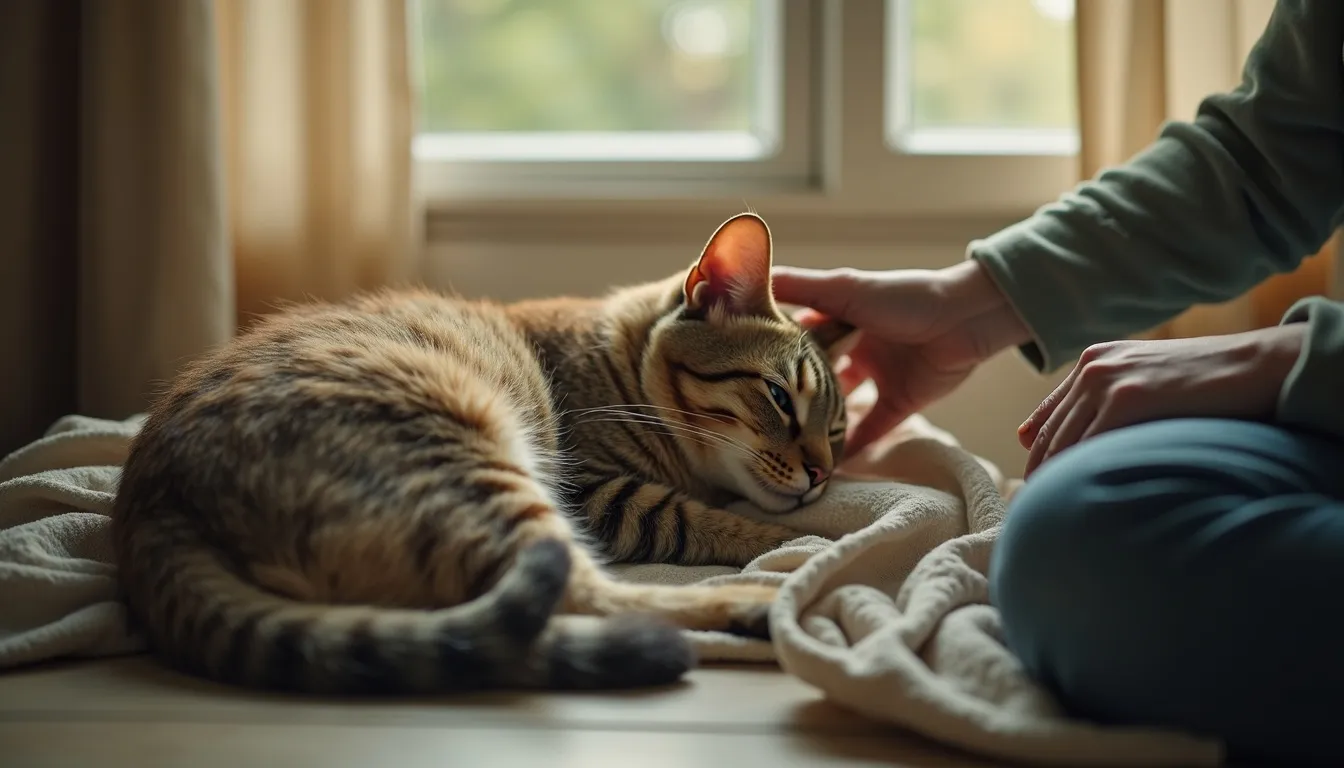
The short version: there is rarely a single obvious sign. The honest test vets use is whether your cat has more good days than bad — weighing pain, appetite, hydration, hygiene, mobility, and whether she still seeks out the things she loved. When the bad days clearly outnumber the good, or a day of real suffering can’t be relieved, it’s time to talk with your vet. Score the seven areas below and bring the total to that conversation.
There is rarely a perfect, obvious day. The honest question vets use isn’t “is today the day?” — it’s whether your cat’s life is still more good than bad: eating, comfort and freedom from pain, the ability to move and stay clean, and still seeking out a warm lap. When the bad days outnumber the good, it’s time to talk with your vet.
The tool further down scores those areas the way vets do, so the decision rests on what you’re seeing over time, not on a single moment. Hallowed Paws is an independent pet-loss resource — built for pet owners, not the industry — so what follows weighs the decision honestly, with no provider to sell you.
This is one of the hardest decisions a person makes, and there’s no version of it that doesn’t hurt. What follows is meant to make it clearer, not faster.
There’s no perfect day
Most people wait for a clear, unmistakable sign that never quite comes — and then carry guilt for “too soon” or “too late” either way. Cats make this harder than dogs, because they hide illness so well that the decline can look like simple aging until it’s advanced.
The kinder frame is the one vets use: you’re not looking for a single terrible day. You’re watching the balance of good days and bad ones over a couple of weeks, and asking whether the things your cat loved are still part of her life. A decision made a little early, to spare suffering, is an act of love — not a failure.
The HHHHHMM quality-of-life scale
Dr. Alice Villalobos, a veterinary oncologist, created a scale that turns a wrenching judgment into seven things you can actually observe and score. It’s the most widely used quality-of-life tool in veterinary medicine, and it works as well for cats as for dogs. Each is scored 0–10; a total above roughly 35 suggests acceptable quality of life is still there.
The calculator at the bottom of this page walks you through the same seven scores and totals them for you. It isn’t a verdict — it’s a way to see the whole picture instead of fixating on one sign, and a clear thing to bring to your vet.
”But she’s still eating” — and the signs that mislead
A few things commonly delay the decision past the point comfort calls for:
- “She’s still eating.” Appetite is reassuring, but a cat can eat a little while in real pain or failing from kidney disease. It’s one measure of seven, not the bar.
- Purring. Cats purr when content — and also when stressed, frightened, or in pain, as a self-soothing reflex. A purr is not proof of comfort.
- Good moments. A bright hour, or a day she seems herself, is real and worth treasuring — but a single good window doesn’t outweigh a fortnight of bad days.
- “She’s not crying, so she’s not hurting.” Cats almost never vocalize pain. Hiding, hunching, a scruffy coat, and stillness are how feline pain usually shows.

Conditions people ask about
Most cats reach this decision through one of a handful of common senior conditions. Diagnosis is rarely the decision point — comfort is.
Chronic kidney disease
Very common in older cats
- Often managed for months to years with diet and fluids
- The turn comes when she stops eating, stays dehydrated, or treatment no longer keeps her comfortable
Hyperthyroidism · cancer
Manageable, until they aren’t
- Many cases are controlled with medication or treatment for a good while
- Weigh the decision on comfort and daily quality, not on the diagnosis itself
Arthritis · not eating
Mobility and appetite
- Pain relief and easy access to food, water, and a low-sided litter box help a lot
- Persistent refusal to eat, or pain that can’t be controlled, is a clear signal to talk to your vet
None of these means the day is today — most are managed comfortably for a long time. The decision point is when comfort can no longer be kept.
What it costs, and what comes after
Knowing the practical side ahead of time spares you from making these calls in the hardest moment.
- Euthanasia. As of June 2026, in-clinic is typically $60–$300; an at-home visit, where a vet comes to you so your cat can be in a familiar place, is usually $300–$650, sometimes more with travel or after-hours fees.
- Cremation is separate. In our 2026 Pet Cremation Cost Report — a survey of 118 U.S. providers — private (individual) cat cremation, with the ashes returned, commonly runs $150–$250, and communal is about $75–$120. Our cat cremation cost guide breaks it down, and the urn size calculator helps if you’ll keep the ashes.
- Ask for the all-in figure in writing, including whether euthanasia and cremation are bundled — and know you’re free to use your own cremation provider rather than the clinic’s.
When the time comes, what to do when your cat dies walks through the steps gently, and pet memorial ideas covers ways to remember her.
You’re not deciding alone
Your vet has had this conversation many times and will tell you, honestly, what they see — ask them directly: “If she were yours, what would you do?” Most will answer. A second opinion is always okay. So is taking a day to sit with it, if a day won’t add to her suffering.
If you’d like a place to start, score the seven areas below. Bring the total to your vet. Whatever you decide, choosing to spare a cat you love from suffering is one of the last, kindest things you can do for her.
Common questions
How do I know when it’s time to put my cat down?
There’s rarely a single obvious sign. The honest test vets use is whether your cat has more good days than bad — measured across appetite, hydration, pain, mobility, hygiene, and the things they used to enjoy. When the bad days clearly outnumber the good, or a day of real suffering can’t be relieved, it’s time to talk with your vet. The quality-of-life calculator below scores the seven areas vets weigh, so the decision rests on observations rather than a single moment.
Is my cat in pain or just old?
Cats hide pain by instinct, so “just slowing down” can mask real discomfort. Look for the quieter signs: hiding more, sitting hunched, reluctance to jump, a scruffy or ungroomed coat, reduced appetite, litter-box changes, or a flat, withdrawn mood. None of these alone is decisive, but several together often mean your cat is coping with more than age. A vet exam, and sometimes a short pain-relief trial, can tell you which it is.
Should I put my cat down if she’s still eating?
Not necessarily — and the reverse trap is more common: “she’s still eating” is often used to delay a decision that comfort already calls for. Appetite is just one of several measures. A cat can still eat a little while being in pain, dehydrated, or unable to move comfortably. Weigh eating alongside hydration, pain, mobility, hygiene, and whether she still seeks out the things she loved. The whole picture matters more than any one sign.
What are the most common reasons cats are euthanized in old age?
The usual ones are chronic kidney disease (very common in older cats), hyperthyroidism, cancer, severe arthritis that limits mobility, and conditions that stop a cat eating or keeping food down. Many are managed comfortably for months or years; the decision point usually comes when treatment stops keeping your cat comfortable, not at diagnosis. Your vet can tell you where on that path you actually are.
How much does it cost to put a cat down?
As of June 2026, in-clinic euthanasia for a cat typically runs about $60–$300, depending on your area and whether sedation is included. At-home euthanasia, where a vet comes to you, is usually $300–$650, sometimes more with travel or after-hours fees. Cremation is separate: in our 2026 Pet Cremation Cost Report (118 providers), private (individual) cat cremation with the ashes returned is commonly $150–$250, and communal is about $75–$120. Some clinics bundle euthanasia and cremation; ask for the all-in figure in writing.
When the time is near and you’ve thought through what comes after, when you’re ready, find a trusted provider near you →.
Connect with the provider we'd trust
Free for pet owners · we sell you nothing · no paid listings, no upsells.