
What to Do With Pet Ashes: Keep, Scatter, or Bury Them

There’s no deadline here, and no wrong answer. Cremated remains are sterile and stable, so you can keep your pet’s ashes for as long as you like before deciding anything — or keep them for good. When you’re ready, the real options are to keep them, scatter them, bury them, or set a little aside for a keepsake. Here’s how each works, including the scattering rules most guides skip.
The short version: there’s no deadline and no health risk — ashes keep indefinitely in any sealed container. Your four real options are to keep them (size an urn at about one cubic inch per pound of your pet’s weight), scatter them (free on your own land; get permission on public land; stay at least three nautical miles out at sea), bury them (almost always fine on your own property, far simpler than burying a body), or turn a small amount into a keepsake. Most people do more than one. Below, each option in full.
First: there’s no rush, and no health concern
People often feel they’re supposed to “do something” with the ashes quickly. You aren’t. This is worth saying plainly because it removes a pressure that doesn’t need to be there.
So if you’re reading this the week you got the ashes back and nothing feels right yet — that’s okay. Come back to the rest of this when you want to.
Keeping them
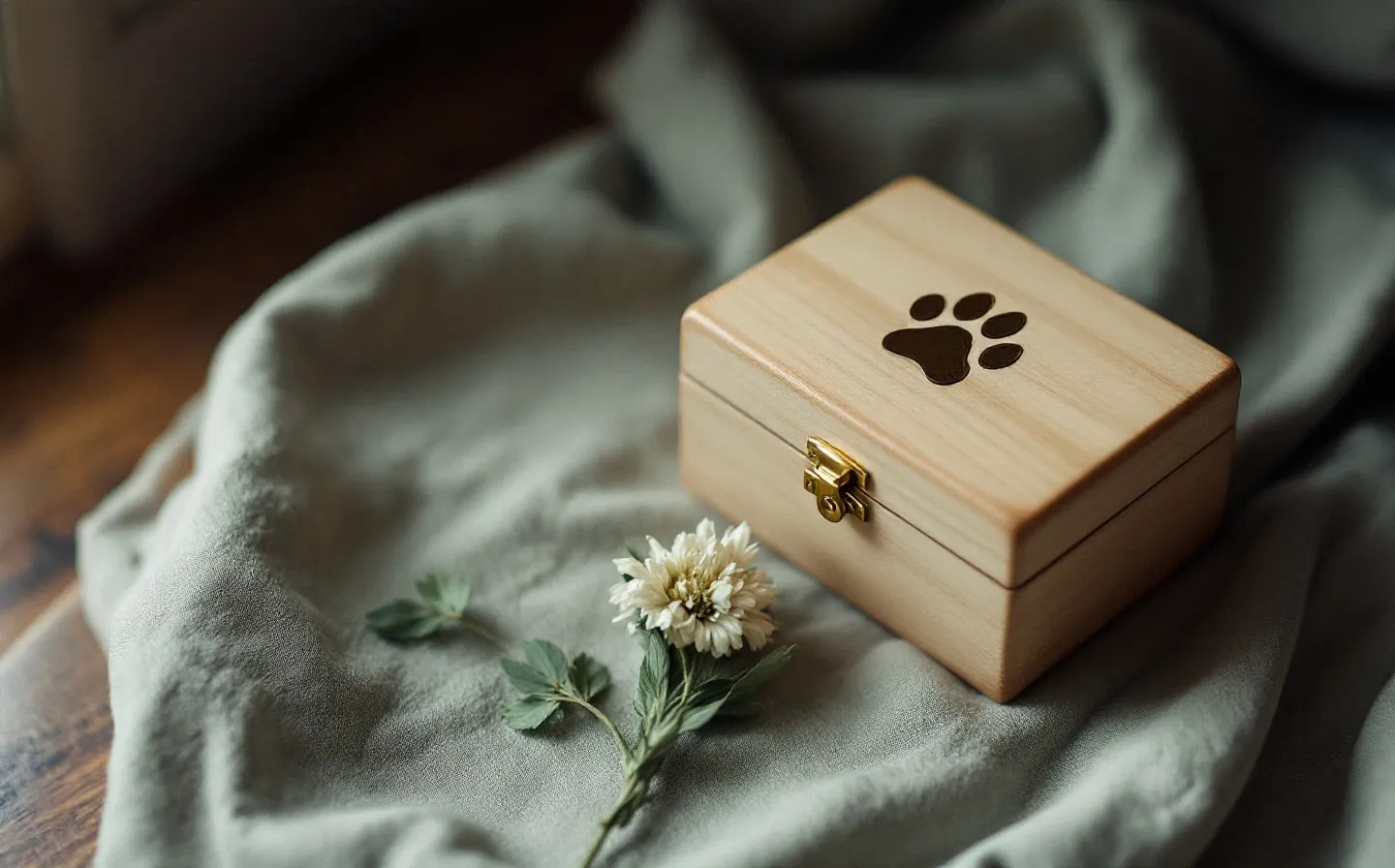
The most common choice is simply to keep the ashes at home. A few ways people do it:
- In an urn or keepsake box on a shelf or mantel. The only practical thing to get right is size: the standard is one cubic inch of capacity per pound of your pet’s healthy weight. Our pet urn size calculator does the math so you don’t order one that’s too small.
- Divided among family. You don’t have to keep them all in one place. Small “keepsake” urns let several people each hold a portion — useful when more than one household loved the same pet.
- Set a little aside for a keepsake. Many people keep most of the ashes and use a small amount for jewelry, glass, or a memorial piece. Pet memorial ideas walks through those options and what they cost.
Is it legal to scatter pet ashes?
Scattering is one of the most meaningful options, and the one with the most misunderstanding around it. Because cremated remains are sterile and inert, scattering pet ashes is far less restricted than burying a whole pet’s body — but “less restricted” isn’t “anything goes.” (We read the actual burial statute in all 50 states for our pet burial law map; the rules below reflect that whole-body burial is regulated where inert ashes generally are not.)
Land you own
Generally fineYour yard, garden, property
- Usually legal and unrestricted for inert ashes
- No permit needed on your own property
- Renters: ask the landlord. HOA: check the rules.
Public land
Permission firstParks, beaches, trails
- Often needs a permit; some places prohibit it
- Check with the park or agency before you go
- Be discreet and avoid water sources and paths
At sea
≥3 nautical milesOcean, large lakes
- Follow the guidance used for human ashes
- At least three nautical miles from shore
- Away from swimmers, beaches, and marinas
There's no single federal law written for pet ashes; this reflects the established, accepted practice. When in doubt, scatter on your own land or get the landowner's permission.
A few practical tips that make scattering go smoothly: pick a still moment and stand upwind; scatter low and close to the ground; and consider keeping a small portion back in a keepsake, because scattering is final and many people are glad later that they didn’t part with all of it.
Can you bury pet ashes in your backyard?
Almost always, yes, if you own the property. Burying ashes is different from — and much simpler than — burying a pet’s body. Because the ashes are inert, backyard burial of cremated remains faces far fewer rules. Renters and HOA residents should check first. A biodegradable urn lets the ashes return to the earth naturally.
If you want to bury the ashes with a tree or plant as a living memorial, there’s one piece of chemistry to get right — and almost no one mentions it.
(Burying a pet’s body at home — not ashes — is a separate question with real legal limits in many places. If that’s what you’re weighing, see how to bury a pet at home and pet burial and cremation laws by state.)
Can you turn pet ashes into a keepsake?
Yes — a small amount of ash can become jewelry, hand-blown glass, or art, so you can keep your pet close in a more wearable or visible form. The one rule of thumb: whenever you mail ashes to a maker, vet them first — check recent reviews, confirm how much ash they need, and ask whether the unused portion is returned. Our pet cremation jewelry guide covers every type, honest prices, and a maker-vetting checklist; pet memorial ideas covers the wider range of keepsakes.
However you choose
You can keep them, scatter them, bury them, split them, or simply leave them on a shelf and not decide. There’s no schedule and no correct answer — only what brings you a little peace. The ashes will wait as long as you need them to.
If you’re still arranging the cremation itself and want to be sure the ashes you get back are truly your pet’s, private vs. communal cremation explains how to confirm it before you commit.
This guide is from Hallowed Paws — an independent pet-loss resource built for pet owners, not the cremation industry. We sell you nothing here; the options above are laid out so you can choose what brings you peace, on your own timeline.
Connect with the provider we'd trust
Free for pet owners · we sell you nothing · no paid listings, no upsells.